Not all recovery straps are equal. The defining characteristic of a kinetic recovery rope is its elasticity — quality nylon braid stretches 20–30% under load, functioning like a giant spring. When a recovery vehicle accelerates while the kinetic rope is attached to a stuck rig, the rope stretches and stores energy. The moment the stuck vehicle's resistance is overcome, that stored energy releases smoothly, pulling the vehicle free with a progressive force rather than a sudden jerk. This is fundamentally different from a polyester tow strap or a static winch line, both of which transmit force as an abrupt shock load.
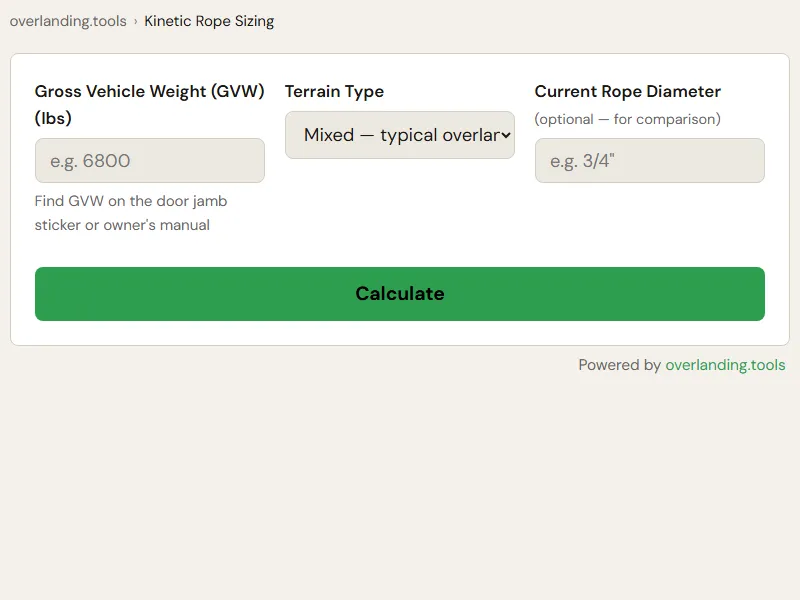
The distinction between MBS (minimum breaking strength) and WLL (working load limit) is critical for safe gear selection. Working load limit is typically MBS divided by a safety factor — often 5:1 for recovery gear. A rope with a 37,000-lb MBS has a WLL of around 7,400 lbs. In practice, kinetic rope ratings are given in MBS rather than WLL, so always compare MBS values when evaluating ropes. Your chosen rope's MBS should comfortably exceed your terrain factor multiplied by your vehicle's gross weight.
Length is more than a convenience consideration — it directly affects how much energy the rope can store during a recovery. A longer rope stretches more in absolute terms for the same elongation percentage, meaning more energy is stored and released more gradually. The result is a smoother pull with less shock on both vehicles and their attachment points. A 30-foot rope is meaningfully better than a 20-foot rope for heavier vehicles or deep-stuck recoveries, even though both carry similar MBS ratings.
Double-Line Pulls and Anchor Selection
For vehicles stuck deeply in mud or on steep grades, a double-line pull using a snatch block can multiply effective pulling force. However, the anchor point in a double-line setup experiences nearly twice the force of the recovery vehicle's pull — ensure your tree saver, deadman anchor, or hi-lift base can handle that combined load. Never use a recovery hook rated below the rope's MBS as a connecting link.
Shackles and Attachment Points
Bow shackles (D-shackles) are the standard connection between a kinetic rope and a vehicle's recovery point. Always use screw-pin shackles rated at or above the rope's MBS. Tighten the pin fully and secure it with a wire, zip tie, or electrical tape to prevent it from unscrewing under vibration and dynamic load. Never route a kinetic rope directly over sharp edges or through hook slots not designed for dynamic load.
Storage and Inspection
Kinetic ropes degrade from UV exposure, chemical contamination (fuel, brake fluid, battery acid), and abrasion. Rinse with fresh water after muddy recoveries and allow to dry fully before storage in a breathable bag — not an airtight plastic container. Inspect the entire length before each use. Discard any rope showing fraying, discoloration, or embedded grit throughout the fibers. A damaged kinetic rope under load can fail catastrophically; replace it rather than risking lives.