Gear Ratio Calculator
Find your ideal ring & pinion ratio after a tire size change.
Gear Ratio Results
Gear for this calculator
overlanding.tools earns a commission on qualifying purchases. Learn more.
How This Calculator Works
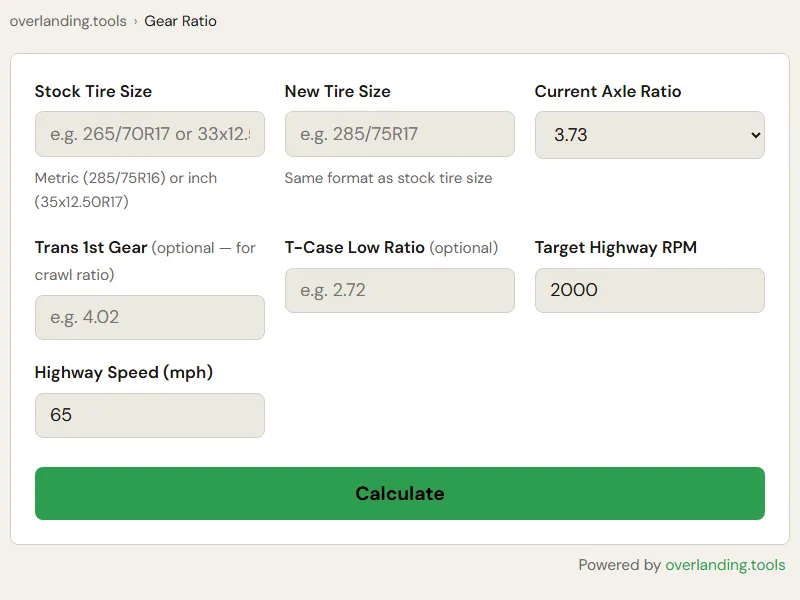
When you install taller tires, your engine has to spin the drivetrain faster to move the vehicle the same distance. This effectively makes your axle ratio numerically lower — your truck feels lazy off the line, loses low-end torque, and the highway RPM drops. Regearing restores the original performance feel by increasing the axle ratio to compensate for the larger tire diameter.
The recommended ratio is calculated by multiplying your current ratio by the new tire diameter divided by the stock tire diameter: New Ratio = (New Tire Diameter / Stock Tire Diameter) × Current Ratio.
RPM at a given speed uses the standard formula: RPM = (MPH × Gear Ratio × 336) / Tire Diameter. The constant 336 comes from converting miles per hour to revolutions per minute through wheel circumference. This formula works for both stock and modified configurations.
Crawl ratio (when optional inputs are provided) is: Trans 1st × T-Case Low × Axle Ratio. A crawl ratio of 70:1 or higher is generally recommended for technical overlanding terrain. The calculation shows you whether your new gear ratio and existing drivetrain give you adequate low-speed control.
Standard gear ratios are manufactured in common increments (3.21, 3.55, 3.73, 4.10, 4.56, 4.88, 5.13). The calculator shows the mathematically ideal ratio and the nearest available standard ratio. A difference of less than 5% between ideal and nearest standard is generally considered acceptable.
The verdict card rates the urgency of regearing. Less than 10% speedometer error means your current ratio is still workable. 10–20% error means noticeable performance loss — regearing is recommended. Over 20% means your truck will feel significantly under-geared and fuel economy will suffer.
Frequently Asked Questions
Embed this calculator on your site
<iframe src="https://overlanding.tools/calculators/gear-ratio/?embed=1"
        title="Gear Ratio Calculator"
        width="100%" height="600" loading="lazy"
        referrerpolicy="no-referrer"
        sandbox="allow-scripts allow-popups allow-popups-to-escape-sandbox"></iframe>